



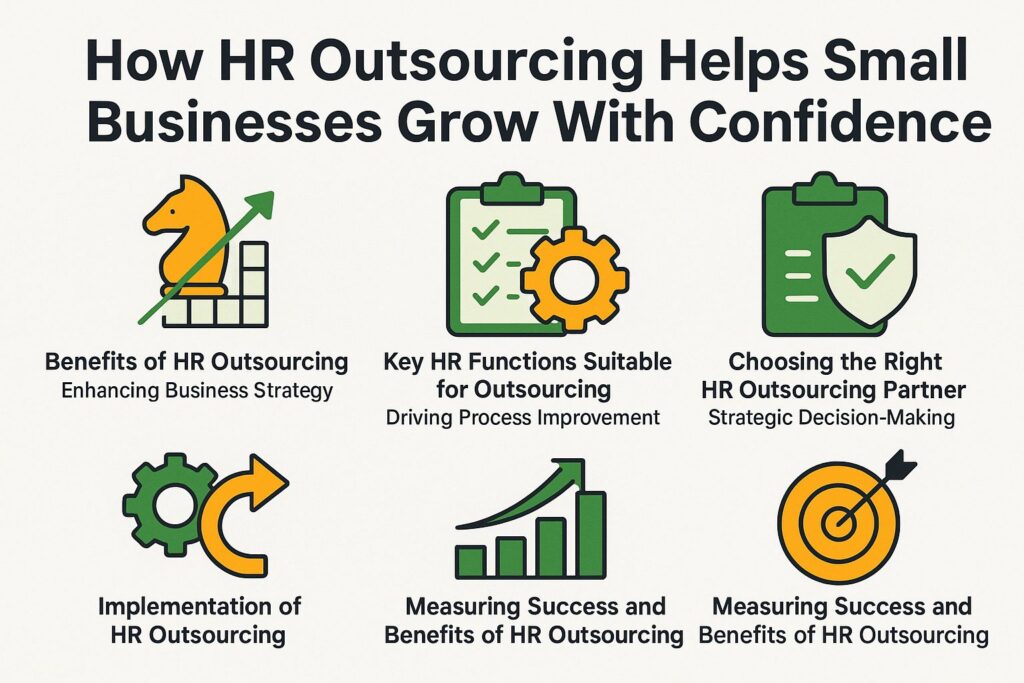
How HR Outsourcing Helps Small Businesses Grow With Confidence
Imagine focusing your energy on growing your small business instead of getting lost in HR tasks. HR outsourcing could make a big difference for your business. Knowing what it means, why it matters, and what advantages it brings can help you save money, gain knowledge, and grow easily. Also, learning which HR tasks to outsource and selecting the right partner will lead you to success. Learn how outsourcing can increase your confidence and help your business grow!
Definition of HR Outsourcing
HR outsourcing means handing over tasks like hiring, payroll services, and administrative tasks to outside companies that specialize in these services, so internal teams can focus on core business and strategic HR activities.
Common HR functions that businesses often outsource include:
- Benefits administration
- Compliance management
- Employee training programs
By doing this, companies can use the knowledge of specialized firms to follow legal rules, allowing their internal teams to concentrate on main business tasks.
For instance, using services like ADP for payroll can seamlessly handle tax filings and deductions. Platforms such as Zenefits provide complete benefits administration, simplifying the process of employee retention and attracting quality talent without burdening the HR department.
Importance for Small Businesses: Enhancing Operational Efficiency
For small businesses, HR outsourcing can improve their ability to compete in the market by providing a fair chance against bigger companies. It allows them to get expert help and resources without the high costs.
Outsourcing HR functions can lead to significant cost savings, with businesses witnessing an average reduction of 30% in HR-related costs. This approach reduces the stress of complicated compliance risks and helps small companies concentrate on their main business operations.
Tools like Gusto make payroll and benefits management easier, while services such as TriNet manage employee benefits and HR rules.
These resources help small businesses compete and hire qualified workers while avoiding the high costs typically linked to handling HR tasks independently.
Benefits of HR Outsourcing: Enhancing Business Strategy
HR outsourcing provides important benefits, such as lowering HR costs by up to 40% and offering better access to HR skills and industry information. For those interested in specific options, see our analysis of the Best HR Outsourcing Companies of 2025, which can help businesses make informed decisions.
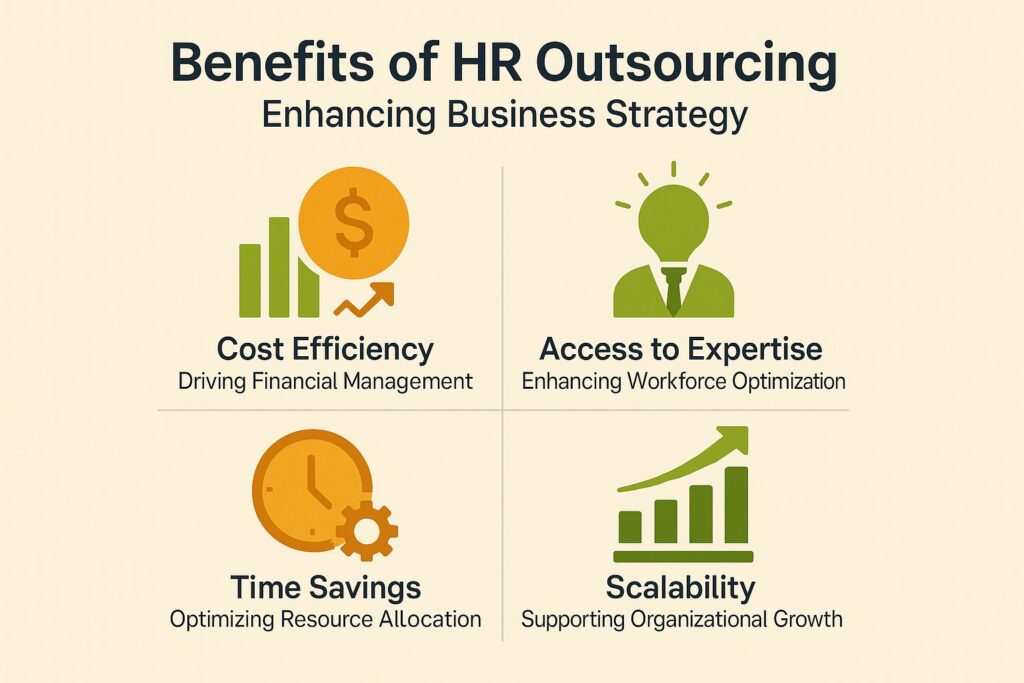
Cost Efficiency: Driving Financial Management
By outsourcing HR functions, small businesses can save thousands of dollars annually, allowing for investment in core areas like product development, strategic alignment, or marketing initiatives.
For instance, a small manufacturer with a $200,000 payroll that opts for outsourcing could see savings of up to $40,000 annually by eliminating the need for a dedicated HR staff.
Utilizing platforms like Gusto or Justworks, businesses can access payroll, compliance, and employee benefits management for as low as $39/month.
Outsourcing lowers legal risks because providers follow labor laws correctly, which can prevent expensive penalties. This financial flexibility allows small businesses to focus resources on growth-oriented initiatives, enhancing their overall competitiveness.
Access to Knowledge: Improving Workforce Efficiency
Outsourcing HR functions enables small businesses to tap into expert knowledge in areas such as compliance, talent acquisition, employee management, and benefits administration, which they might not afford otherwise.
Small businesses can use the HR software and experienced staff provided by companies such as TriNet, Insperity, or ADP.
TriNet offers personalized HR services and assists with compliance, simplifying tasks for small to medium-sized businesses. Similarly, Insperity provides extensive benefits packages, ensuring employee satisfaction without large overhead costs. For an extensive analysis of the best options available, our comprehensive study on the best HR outsourcing companies of 2025 offers invaluable insights.
With these partnerships, companies improve their HR functions and draw in more applicants, creating a stronger team.
Saving Time: Using Resources Well
HR outsourcing can free up to 20 hours per month for small business owners, enabling them to focus on strategic partnerships and tasks that drive business growth and development.
Small business owners can greatly increase productivity by outsourcing tasks such as payroll processing, hiring, and managing employee benefits.
For example, using a service like ADP for payroll can make payment tasks simpler and cut down on mistakes, while using platforms like Gusto for onboarding can help with quick hiring.
Tracking time spent on HR tasks before outsourcing with a tool like Toggl can illustrate the efficiency gained, showing owners where their time savings can be redirected towards growth-centric activities, such as sales and marketing strategies.
Scalability: Supporting Organizational Growth
HR outsourcing allows small businesses to expand with business agility and flexibility, overcoming the difficulty of increasing their own HR staff.
Many businesses have used HR outsourcing to support their growth. For example, XYZ Tech expanded from 20 to 100 employees in just three years by partnering with an HR outsourcing firm. This partnership handled recruitment, benefits administration, and compliance, allowing the founders to focus on core operations.
Similarly, ABC Retail experienced a 30% reduction in HR costs by outsourcing payroll and training, thus redirecting savings into product development.
By evaluating their specific needs and choosing a trusted provider, businesses can effectively scale their HR efforts aligned with growth demands.
Key HR Functions Suitable for Outsourcing: Driving Process Improvement
Outsourcing some HR tasks can help small businesses gain access to expert services while they stay focused on their main activities.
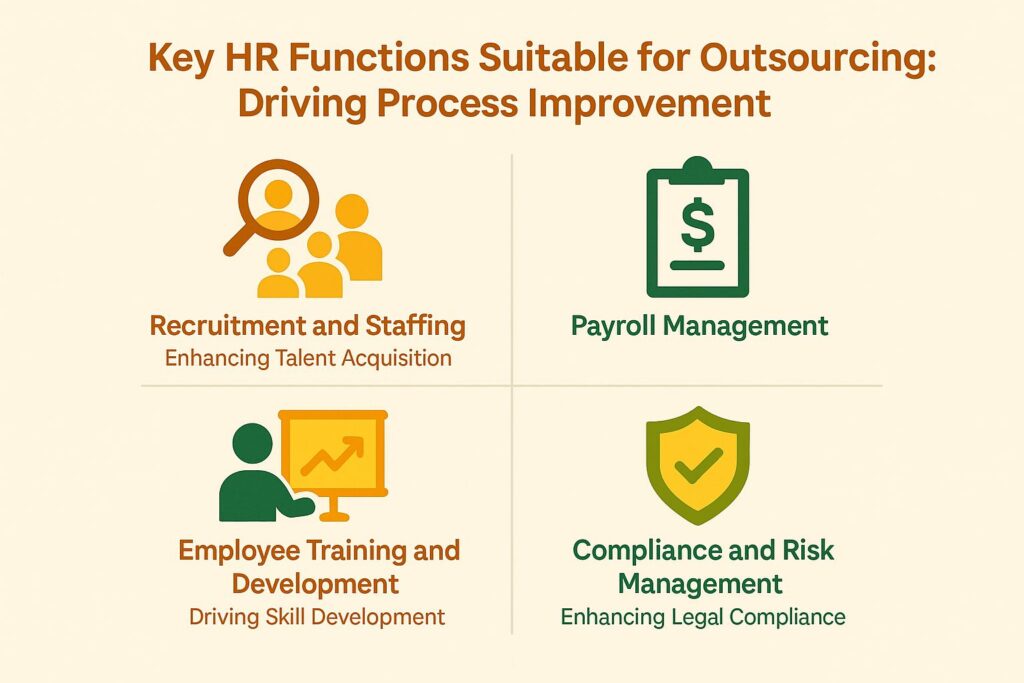
Recruitment and Staffing: Enhancing Talent Acquisition
Recruiting is simplified by using hiring methods and staffing services that use platforms like LinkedIn and ZipRecruiter to quickly locate qualified candidates.
By outsourcing recruitment, companies gain access to a broader talent pool, ensuring a diverse range of applicants.
For instance, using LinkedIn's advanced search tools can help identify potential candidates with specific skill sets in just a few clicks, greatly reducing the time spent on initial sourcing.
ZipRecruiter allows job postings to be automatically distributed to over 100 job boards, increasing visibility.
This method significantly shortens the hiring process by using specialized recruitment companies to evaluate candidates in advance, leading to more successful hiring.
Payroll Management
Small businesses can comply with tax regulations, save time, increase efficiency, and reduce errors by using services like Gusto or ADP to manage their payroll.
Gusto makes payroll easier with tax calculations and direct deposit included, costing approximately $40 monthly plus $6 for each employee.
ADP offers scalable solutions that include employee self-service options and detailed reporting, ideal for businesses anticipating growth.
Companies that outsource payroll typically report 30% fewer errors, which can translate to significant savings in both time and costs associated with corrections.
By using these services, small businesses can spend more time on important plans instead of getting caught up in payroll details.
Employee Training and Development: Driving Skill Development
Outsourcing employee training and development can lead to improved workforce skills and employee engagement while providing access to specialized training programs not available internally.
Websites like Coursera for Business and LinkedIn Learning offer specific training plans to help employees quickly improve their skills.
For example, Coursera provides courses from prestigious universities covering a range of topics, allowing companies to create customized learning paths.
LinkedIn Learning, on the other hand, features a vast library of video tutorials, ideal for on-the-go learning.
By using these platforms in your training plan, companies can make sure employees get current lessons from industry professionals, building both involvement and advanced skills.
Compliance and Risk Management: Enhancing Legal Compliance
Hiring external support for compliance and risk management helps small businesses deal with complicated labor laws and rules, lowering compliance risks, legal risks, and fines.
By partnering with experts, businesses can focus on their core activities while ensuring adherence to regulations. Tools like Zenefits make it easier to follow rules by giving advice on employee benefits, payroll, and labor laws.
Zenefits handles benefit administration for small companies, reducing the time spent on paperwork. Outsourcing firms like TrustWave offer audits and training designed for small businesses, helping them keep up with regulatory changes. For those seeking further support, The Best HR Services for Startups and Small Teams offers guidance tailored to the unique needs of smaller organizations.
This proactive approach reduces risks and improves how operations work.
Selecting the Best HR Outsourcing Company: Important Choice
Choosing the right HR outsourcing partner is essential for getting the most from outsourcing and matching it with business goals.
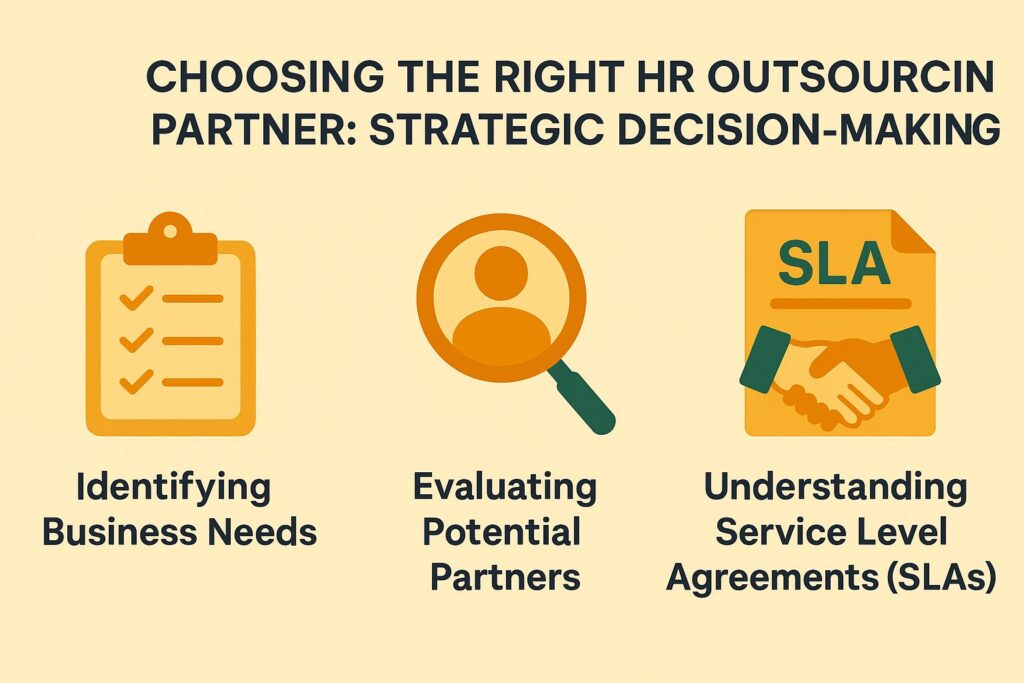
Identifying Business Needs
Begin by carefully evaluating your HR requirements and vendor management strategies. This will guide you in choosing the right outsourcing services that match your business objectives.
Begin by identifying key areas requiring support, such as payroll, recruitment, or training. Next, talk to stakeholders to learn about the present difficulties.
Create a checklist that includes:
- existing HR capabilities
- employee feedback
- particular gaps in knowledge or service
Once clarified, consider outsourcing options like PEOs (Professional Employer Organizations) for full support or specific companies for particular jobs, such as managing benefits. This clear method guarantees that your outsourcing decision directly meets your organization's specific needs.
Evaluating Potential Partners
When looking at possible HR outsourcing companies, look at things like their experience in the industry, the services they provide, and feedback from clients to find one that suits your needs.
Evaluate how quickly they respond and how they communicate by having interviews. Prepare specific questions about their experience with companies in your sector, human resources, and how they handle challenges like compliance and turnover rates.
Review case studies to understand their impact on other businesses, focusing on metrics such as employee satisfaction, performance management, and efficiency improvements.
Talking directly with current or former clients can give useful information about how well they work, their business resilience, and the quality of their collaboration.
Knowing Service Level Agreements (SLAs) for HR Outsourcing
A well-defined service level agreement (SLA) sets expectations for deliverables and performance metrics, ensuring accountability from your HR outsourcing partner.
Key elements to consider when drafting an SLA include response times for inquiries, the accuracy rate of payroll processing, cost-effective solutions, and employee satisfaction scores.
For example, you might stipulate that the HR partner must respond to employee queries within 24 hours or maintain a payroll accuracy rate of 99%. Reviewing performance quarterly allows everyone to set goals and adjust them if necessary.
These structured agreements protect both parties and create a cooperative work atmosphere.
Implementation of HR Outsourcing
To successfully carry out HR outsourcing, thorough planning and clear communication are needed to reduce problems and make transitions smooth, enhancing service delivery.
Transition Planning for HR Outsourcing
Effective transition planning involves creating a detailed roadmap that outlines timelines, responsibilities, and key milestones for the outsourcing process, ensuring operational costs are kept under control.
Start by identifying the specific HR functions you plan to outsource, such as payroll, recruitment, or employee benefits administration. Create a timeline for each function, indicating when to start the outsourcing process and expected completion dates.
For example, if you are outsourcing payroll, start the process three months before the end of the fiscal year. Assign responsibilities to team members, ensuring clear accountability.
Use templates or tools such as Asana or Trello to monitor progress. Regularly review milestones to adjust strategies and address any challenges accordingly, ensuring business continuity.
Communication with Employees
Clear communication with employees about HR outsourcing is important to get their support and reduce worries about management changes, preserving company culture.
Begin by developing a detailed communication plan that includes key messages about the outsourcing process, timelines, reasons for the decision, and maintaining effective employee relations.
Schedule an initial meeting to discuss the changes and provide employees with a platform to voice their concerns. Accompany this with a FAQs document addressing common worries, such as job security, changes in responsibilities, and the benefits of outsourcing.
Regular updates via email or team meetings will help maintain transparency throughout the transition, ensuring employees feel informed and engaged with the process.
Measuring Success and Benefits of HR Outsourcing
To see how well HR outsourcing is working, set clear key performance indicators (KPIs) that match your business goals. For a detailed overview of top providers that might align with your KPIs, consider reviewing our comparison of the best HR outsourcing companies of 2025.
Key Performance Indicators (KPIs) for HR Outsourcing
Track KPIs such as employee turnover rates, time-to-hire, and compliance incident counts to assess the impact of HR outsourcing on your organization.
To monitor these key performance indicators, use tools like BambooHR to get quick information on turnover rates. This allows you to detail the data by department or reasons for leaving, helping with workforce planning.
To speed up hiring, try using an applicant tracking system (ATS) like Greenhouse. It includes reporting tools to monitor and improve how quickly you hire.
Track compliance incidents with a dedicated compliance management tool such as ComplyGuru, which helps document and address regulatory issues effectively, improving business development.
Together, these tools show a complete view of how outsourcing affects your HR metrics and analytics.
Feedback Mechanisms for HR Outsourcing
Implementing feedback mechanisms, such as surveys and regular check-ins, helps to gauge employee satisfaction and identify areas for improvement in outsourced HR services.
To effectively assess outsourced HR functions, start by designing a simple survey with questions addressing key service areas. For instance, ask employees to rate their satisfaction with responsiveness, support quality, service quality, and communication clarity on a scale from 1 to 5.
Set up quarterly check-ins where team members can provide open-ended feedback. A sample question could be: ‘What improvements would you suggest for our HR services?' Use tools like Google Forms for surveys and a simple spreadsheet to track responses and changes over time.
This organized method will provide useful information.
Upcoming Changes and New Ideas in HR Outsourcing
New trends in HR outsourcing involve increased use of AI-based HR technologies and a move towards service models that fit particular business requirements.
Small businesses should get ready by looking into AI tools like ChatGPT for checking job applicants or using platforms like Gusto for handling payroll and benefits tasks, aiding the shift to digital processes.
Consider flexible service agreements that allow for scaling services as needed. This prevents overcommitment in uncertain economic climates and aids in effective stakeholder engagement.
Concentrate on connecting HR technology with current systems to simplify processes. Keeping up with trends like managing remote employees will help your HR strategies stay successful and competitive, providing a competitive advantage.


Author: Hudson Piccini
Hudson Cynar, a Harvard University alumna and the owner of three prosperous enterprises, is a distinguished business consultant, author, and writer. Her expertise spans multiple business sectors, with a particular emphasis on storage containers, commercial copiers, payroll services, and medical billing software. Dedicatedly investing thousands of hours into product and service research, Hudson crafts insightful reviews to guide entrepreneurs in making informed decisions for their businesses.
